

What is Acute Gastritis?
Acute gastritis is nothing but an inflammation or swelling occurring in the stomach lining. Of course, it is caused by several reasons and lifestyle changes. It can cause severe and nagging pain, and it feels uncomfortable sometimes. But don’t worry; the pain is temporary and usually occurs for only a few hours.
Those who have acute gastritis may experience inflammation or swelling. It may happen as quickly as possible, and harrowing moments are caused. The condition may occur due to bacteria, foods, or medications.
Acute Gastritis vs Chronic Gastritis
Gastritis is the inflammation of the stomach lining. Acute gastritis means it happens suddenly. It is severe and lasts a short time. Chronic gastritis, as the name suggests, is long-lasting. It develops slowly over time and inflammation increases the longer it is left untreated. Those with chronic gastritis may also have more sensitive triggers and experience flare-ups.
A Quick Glance: Key Differences Between Acute Gastritis and Chronic Gastritis
|
Feature |
Acute Gastritis |
Chronic Gastritis |
|
Onset |
Sudden |
Gradual |
|
Duration |
Short-lived (days to weeks) |
Long-term (months to years) |
|
Typical Acute Gastritis Causes |
Excessive alcohol consumption, strong pain medications, sudden stress |
Long-term H. Pylori bacterial infection or autoimmune factors |
|
Acute Gastritis symptoms |
Intense burning, sharp abdominal pain, nausea, vomiting |
Often milder, vague, or no noticeable symptoms at all |
|
Risk of ulcers |
Higher risk of sudden, painful erosions |
Higher risk of gradual stomach lining thinning and ulcers |
Causes of Acute Gastritis:
Acute gastritis occurs in the stomach lining, which may be weak or damaged by any conditions. It allows digestive acids to irritate the stomach and cause pain symptoms. You have to notice the common cause of triggering acute gastritis in detail.
-
- Taking certain medications such as NSAIDs and corticosteroids
-
- Due to H. Pylori
-
- Alcohol consumption habit
Of course, H.pylori is a bacterium that may create stomach infections and cause peptic ulcers. It causes several conditions, and you may experience acute gastritis often, and go away within hours.
-
- Stomach Inflammation
-
- Loss of Appetite
-
- Nausea
-
- Bloating
-
- Abdominal Pain
Other less common Causes of Acute Gastritis include:
-
- Viral Infections
-
- Extreme Stress
-
- Lower Immune System to Attack The Stomach Lining
-
- Digestive Diseases & Disorders Such As Crohn’s Disease
-
- Bile Reflux
-
- Cocaine Use
A specific subtype worth noting is antral gastritis, which refers to inflammation localized in the antrum (lower part of the stomach). It is commonly linked to H. Pylori infection, and can contribute to ongoing digestive discomfort.
Can Stress Cause Acute Gastritis?
When the body is under intense physical or emotional stress, it triggers changes in the stomach acid levels and reduces blood flow to the stomach lining. This weakens the lining’s natural defenses and makes it more prone to irritation. Stress-related acute gastritis is especially common after major surgery, serious illness, or severe injury. Even long-term emotional stress from work or personal life can play a role. Managing stress through regular exercise, proper sleep, and relaxation techniques can go a long way in keeping your stomach healthy.
Symptoms of Acute Gastritis:
People with acute gastritis may have proper symptoms, but sometimes only mild symptoms occur. Some symptoms may vary from mild to severe based on the conditions that occur in the system.
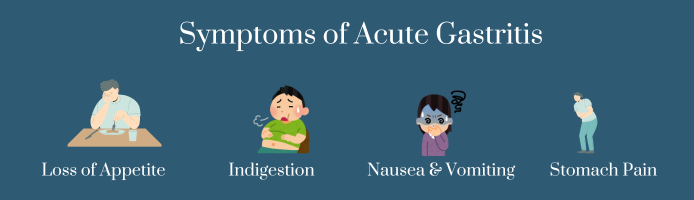
-
- Loss of Appetite
-
- Indigestion
-
- Black Stools
-
- Nausea
-
- Vomiting
-
- Bloody Vomit
-
- Pain in the Abdomen
-
- Feeling Full Even after Eating Small Quantity
The Causes & Symptoms of Acute Gastritis can differ for every individual depending upon the lifestyle and current health status. Ignoring the causes and symptoms of acute gastritis may lead to severe conditions in the future if it remain untreated. A professional Gastroenterologist will guide you to diagnose and treat Acute Gastritis properly.
Treatment of Acute Gastritis
In most cases, proper treatment and diet patterns must be followed strictly to overcome the acute gastritis condition. It is better to take a limited bland diet, which aids in treating gastritis effectively. Always don’t take spicy food, fried items, and citrus foods which trigger stomach acid production.
Usually, no treatment is required to cure acute gastritis. It may occur for some time and go away after some hours. If the problem persists, consult the gastroenterologist’s doctor and get rid of the bacterial presence infection. So, two to three antibiotic schedules are required to overcome the gastritis symptoms accordingly.
Use proper Medications
-
- To treat gastritis, you can get both over-the-counter and prescription medicines. However, it is safe to use prescription medicine by consulting a doctor. They may recommend a combination of drugs to overcome acute gastritis symptoms effectively.
-
- Taking antacids and syrups is the best way to overcome gastritis symptoms, and use it often every 30 minutes if needed. But, take only a limited dose level suggested by the doctor to overcome side effects.
-
- Antibiotic medicines effectively treat acute gastritis symptoms and should be taken 1 hour before taking food. It will stop producing stomach acid reflux and treat the conditions effectively.
-
- Using pantoprazole and omeprazole may stop stomach acid production. However, it should be recommended that it take only 14 days, but only with consultation.
-
- Sometimes, doctors will prescribe antibiotics to treat bacterial infections such as H.Pylori. But, it is only taken by the doctor’s prescription. Adult supervision is necessary for children below 12 years of age to treat gastritis.
-
- Everyone must follow a four-week schedule to treat acute gastritis and overcome the side effects quickly. At the same time, you have to follow a proper schedule to maintain a suitable treatment.
Carry out proper home care
Of course, lifestyle changes may happen suddenly and cause acute gastritis. It may be due to the poor lifestyle habits you are facing. So, it is a must to change one’s lifestyle habits entirely and eat only the recommended foods and fruits.
-
- It is better to avoid or limit alcohol consumption
-
- Always avoid spicy, fried, and acidic foods
-
- It is better to follow eating frequent and small meals
-
- Do activities and reduce stress
Best Diet for Acute Gastritis Recovery
What you eat plays a big role in how quickly you recover. Stick to easy-to-digest, low-acid foods during an acute gastritis flare-up. Good options include plain rice, steamed vegetables, oatmeal, bananas, and more.
These are gentle on the stomach and do not stimulate excess acid. Drink plenty of water and avoid carbonated drinks, coffee, and alcohol entirely.
Eating smaller meals more frequently is better than eating two or three large ones. Avoid lying down immediately after eating, as this can worsen acute gastritis symptoms. A simple, bland diet for a few days can make a noticeable difference in recovery time.
When Should You Visit a Gastroenterelogist?
Mild acute gastritis usually settles on its own, but some signs call for professional attention. See a gastroenterologist if your stomach pain lasts more than a week, if you notice blood in your vomit or stool, or if you are losing weight without trying. Frequent nausea after eating, severe bloating, or symptoms that keep coming back despite home remedies are also red flags.
A specialist can run tests to check for H. pylori, rule out other conditions, and recommend the right course of treatment. Do not delay if the acute gastritis symptoms feel more intense than usual or are getting worse over time.
Final words
Acute gastritis is a common but manageable condition. Knowing what acute gastritis is, understanding its causes, and catching the acute gastritis symptoms early can help you recover faster and avoid complications.
Whether it is triggered by an infection, medications, stress, or diet, the right treatment and lifestyle changes can bring real relief. If symptoms persist or keep returning, a gastroenterologist is your best resource for proper diagnosis and care.
Take your stomach health seriously, make small but consistent changes to your diet and habits, and do not hesitate to seek medical help when needed.