
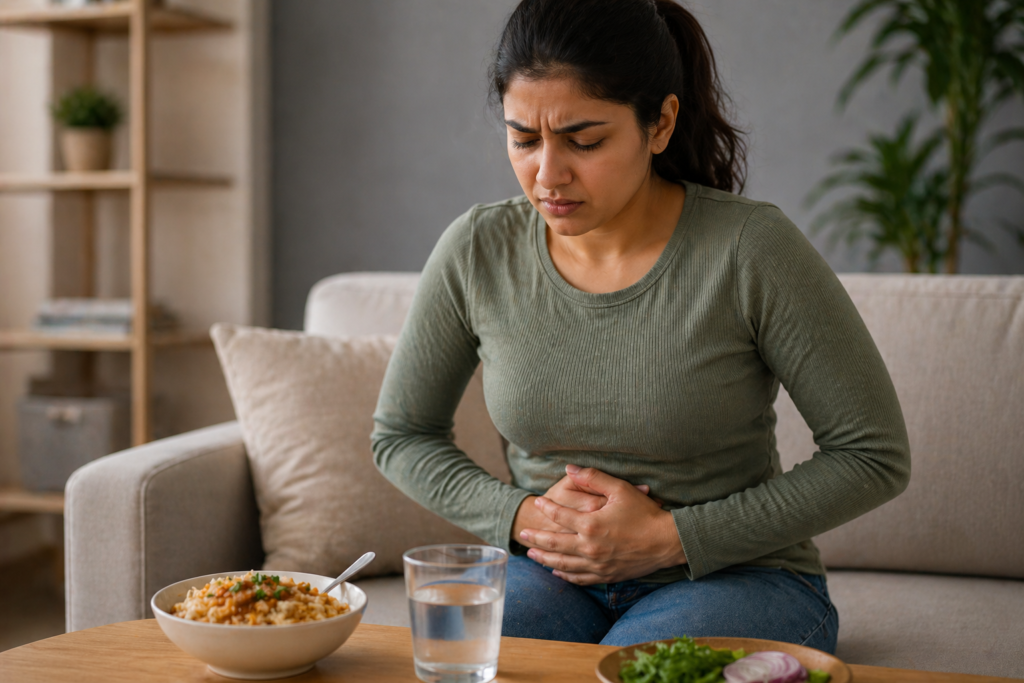
Picture this: It’s festival time, and there is a delicious meal on the dining table. After the meal, you feel full and satisfied. You drag yourself to the couch, and within a few minutes, you realize your stomach looks bloated. We’ve all been there, especially around the holidays.
A bloated stomach after a meal is more common than you think. That doesn’t mean it’s not frustrating. If you’re noticing bloating after every meal, it might be a sign of some other digestive condition. In such a case, it’s best to stay informed so you can seek help if needed.
In this blog, we will discuss why you may feel bloated after eating and, more importantly, how to reduce bloating, so you can continue feeling energetic after a meal.
What is Bloating?
Bloating is the feeling of fullness, tightness, or pressure in the abdomen. It is often described as a bloated stomach. It may or may not be accompanied by visible swelling. The discomfort can range from mild to severe.
In simple terms, bloating happens when your gastrointestinal (GI) tract fills with air or gas, leading to that heavy, stretched sensation in your belly.
The most common cause of gas and bloating is excess intestinal gas. This gas is usually produced when gut bacteria break down undigested food, especially carbohydrates. If your body struggles to digest certain foods, like dairy, beans, or wheat, it can lead to increased fermentation and gas buildup.
Bloating can also occur even when the actual amount of gas is normal. In such cases, your body may simply be more sensitive to gas, making the sensation feel worse than it actually is.
Occasional bloating is very common, affecting up to 10–25% of people, but frequent or persistent symptoms may indicate an underlying digestive issue.
Bloated Stomach After Eating Causes
Most of the time, there are two reasons to blame for a bloated stomach after eating. It is usually a sign that your digestive system is not working the way it should. It is struggling with either gas or fluid retention. Let’s explore each problem in depth.
Gas Problems
Gas problems means there is a buildup of air in your digestive tract. The most common reasons for this are:
- Eating too fast: We all have moments of “inhaling” our food, which means we eat really quickly. Maybe we are hungry or in a hurry; nevertheless, eating too quickly can be bad for your health. As you inhale food, you’re also inhaling air. Known as “aerophagia” or air swallowing, this habit is a major contributor to trapped gas and bloating.
- Eating too much fiber: At first glance you may think, “fiber can be bad for you?” That is not the case here. Fiber is great for your gut health. The problem arises when you suddenly increase your fiber intake. Your gut is not used to large amounts of fiber, so to break down the food particles, it produces excess gas.
- Food intolerances: Have you ever experienced or heard of lactose intolerance? In simple terms, your stomach cannot handle dairy if you have lactose intolerance. There are other types of intolerances, such as fructose or gluten. Your digestive tract struggles to digest these elements, in turn leading to problems like indigestion, gas, and diarrhea.
- Carbonated drinks: When you pour a fresh glass of cold soda, it bubbles up at the top and then slowly dissipates. Don’t be fooled, those bubbles haven’t vanished. When you drink the soda, the bubbles get trapped in your digestive system. You must have noticed that you burp more often after drinking soda. This is gas building up in your digestive tract.
Fluid Retention
Bloating can also be caused by fluid retention. It might make you feel heavy and cause a “stretched” feeling around your abdomen. Fluid retention is your body holding on to excess water. This is most common around the abdomen. This type of bloating tends to feel tight or like a swelling, rather than sharp discomfort. The most common causes of bloating from fluid retention are:
- Too much salt: If you’re eating a lot of processed foods (takeout, chips, etc.), you might feel tightness in your stomach after you have finished the meal. With high-sodium diets, your body holds on to all the water it can to keep your internal chemistry balanced.
- Hormonal fluctuations: Hormones like estrogen and progesterone are notorious for causing hormone fluctuations. They dictate how your body stores fluids, leading to temporary bloating.
- Dehydration: It sounds ironic, but dehydration can cause your body to go into conservation mode. It begins storing whatever fluid it can, making you feel more bloated.
- Sedentary Lifestyle: Most of us deal with a 9 to 5 desk job. The truth is, this lifestyle keeps you seated and sedentary for far too long. The longer you sit, the more gravity does its work. Your circulation and digestion stall, allowing fluid buildup in places you want it least.
How to Treat and Prevent Bloated Stomach After Eating
Gas Problems
If you’re looking for some quick home remedies for gas, try these at home:
- Peppermint tea
Peppermint tea acts as an antispasmodic, helping your digestive tract relax. Gas passes more easily this way.
- Ginger
Ginger is a natural prokinetic, which means it helps speed up the movement of food through the stomach. Boil fresh pieces of ginger in water and sip on the concoction after a meal to aid digestion.
- Yoga poses
If you’re feeling really gassy after a meal, which is causing a bloated stomach, try some yoga poses to relieve some of the gas. The Apanasana pose (pressing your knees to your chest) can be a good pose to remove trapped gas.
- Heat therapy
A heating pad to the abdomen can help relax your gut muscles, releasing trapped gas.
If you’re looking for more long-term remedies, here’s how to reduce bloating permanently. Remember, the goal is to stop the bloating before it occurs:
- Chew slowly. The digestion process begins at the mouth. Chew your food thoroughly (roughly 20 to 30 chews per bite). Chewing slowly means your food is mixed with digestive enzymes, reducing the chances of you swallowing air.
- Identify and avoid trigger foods. Keeping a diary can help you track your food intolerances. Do specific foods make you gassy or bloated? Pinpointing your triggers is the most effective way to stop a bloated stomach after eating in the long run.
- Stay hydrated. Hydration is one of the most important elements of proper digestion. Water helps move fiber through your system, preventing constipation. However, don’t chug a whole glass of water during your meal. This can dilute the digestive enzymes. Sip water throughout the day instead. Aim for at least 2 litres of water a day.
- Light movement can also help improve digestion. Take a short walk after eating and watch gravity do its work. The physical movement helps your body digest your food better and keeps gassy bloated stomachs at bay.
Fluid Retention
Quick remedies to help with fluid retention can be as follows:
- Drink more water. That sounds counterproductive, but it can actually signal your body that it is okay to flush out excess fluid rather than hoarding it. Adequate hydration means your body doesn’t need to hold on to sodium and other stored fluid.
- Use potassium as a counter for excess salt. Grab a banana, spinach, or coconut water and balance out the sodium with potassium.
- Physical exercise can help with fluid retention too. You don’t need to do a full body HIIT exercise. A short walk or some light stretching is just as good for your body. It gets the circulation going and redistributes excess fluids. You sweat out what is remaining!
- You can try some natural diuretics. Fennel or dandelion teas are gentle, natural diuretics that help your kidneys flush out any excess fluid. These are great replacements if you don’t wish to take any OTC medicine.
- Make magnesium a priority, especially if you experience menstruation. Sometimes a bloated stomach occurs around the menstrual cycle. In such a case, magnesium can help improve circulation and reduce fluid retention. Magnesium is available as an OTC medicine. But if you want natural replacements, you can try pumpkin seeds, almonds, dark chocolate, and more. However, remember that moderation is key.
When to See The Doctor
Most of the time a bloated stomach is just a temporary reaction to a heavy meal. But if your bloating is accompanied by severe pain, unintended weight loss, or a persistent change in bowel habits, it is time for a chat with your gastroenterologist in Thane.
There are certain digestive conditions that also cause a bloated stomach after eating, like IBS, SIBO, Celiac disease, etc.
These underlying conditions should be treated as soon as discovered, so you can learn your triggers and modify your lifestyle and eating habits accordingly.
Conclusion
Feeling like a human balloon isn’t fun. Usually, it is your body’s way of telling you it needs more care. Slowing down at the dinner table, staying active, and using home remedies to relieve gas or fluid retention before it becomes a problem are great ways to reduce bloating after eating. Understanding how to reduce bloating is the first step to making sure your body gets the extra attention it deserves.
So, next time you sit down for a meal, take a deep breath and enjoy every bite you take. Give your digestive system the time it needs to do its job.
A bloated stomach after eating is usually caused by the buildup of gas in your digestive tract. This can happen when food is not properly digested and gets fermented by gut bacteria, producing gas. Eating too quickly, overeating, or consuming foods like beans, dairy, or carbonated drinks can also contribute to gas and bloating. In some cases, food intolerances (like lactose intolerance) or digestive conditions such as IBS can be the underlying cause. If the bloating occurs frequently, it may indicate a recurring gas problem that needs dietary adjustments.
In most cases, gas and bloating are common digestive issues and not a cause for concern. They often result from everyday habits like eating certain foods, swallowing air, or temporary digestive imbalances. However, if your gas problem becomes persistent, severe, or is accompanied by symptoms like abdominal pain, unexplained weight loss, or changes in bowel habits, it could signal an underlying condition. Chronic bloating should not be ignored, and consulting a healthcare professional can help rule out more serious concerns.
If you’re wondering how to reduce bloating quickly, there are several simple remedies you can try. Going for a short walk helps stimulate digestion and move trapped gas through your system. Drinking warm water or herbal teas like ginger or peppermint can soothe your digestive tract. You can also try gentle abdominal massage or yoga poses designed to relieve gas and bloating. These home remedies for gas are often effective for mild, temporary discomfort and can provide quick relief.
Certain foods are known to trigger gas and bloating because they are harder to digest or produce more gas during digestion. Common culprits include beans, lentils, cabbage, broccoli, onions, dairy products, and carbonated beverages. Foods high in artificial sweeteners can also contribute to a gas problem. Everyone’s digestive system is different, so identifying your personal triggers is key to preventing a bloated stomach.
Yes, stress can significantly impact your digestive system and lead to a gas problem. When you are stressed, your body’s digestion slows down, which can cause food to sit longer in the gut and produce more gas. Stress can also increase gut sensitivity, making you feel more discomfort from normal levels of gas. This often results in increased gas and bloating, even without major dietary changes. Managing stress through relaxation techniques can help reduce these symptoms.
There are several effective home remedies for gas that can help relieve discomfort naturally. Drinking herbal teas like ginger, peppermint, or chamomile can aid digestion and reduce gas buildup. Fennel seeds are also widely used to ease gas and bloating. Warm water, light physical activity, and avoiding heavy meals can further help manage a bloated stomach. These remedies are simple, accessible, and often provide quick relief without medication.
If you want to know how to reduce bloating naturally, focus on improving your eating habits and lifestyle. Eating slowly, chewing food thoroughly, and avoiding overeating can make a big difference. Limiting foods that trigger gas and bloating, staying hydrated, and including probiotics in your diet can support better digestion. Regular exercise also helps prevent a gas problem by keeping your digestive system active. Over time, these habits can significantly reduce episodes of a bloated stomach.
Feeling bloated even after eating small amounts can be due to increased sensitivity in your digestive system rather than the quantity of food. Conditions like IBS, hormonal changes, or slow digestion can cause gas and bloating even with minimal intake. In some cases, your body may produce excess gas or have difficulty moving it through the intestines, leading to a bloated stomach. Identifying triggers and improving gut health can help reduce this issue.
Yes, drinking water can help relieve a bloated stomach, especially if the bloating is related to constipation or poor digestion. Proper hydration helps break down food more efficiently and supports smoother bowel movements, reducing a gas problem. Warm water, in particular, can be soothing and may help reduce gas and bloating more effectively than cold beverages. Staying hydrated throughout the day is a simple yet powerful way to prevent bloating.
You should consult a doctor if your gas and bloating are persistent, severe, or interfere with your daily life. Warning signs include sharp abdominal pain, unexplained weight loss, frequent vomiting, or changes in bowel habits. While occasional gas problems are normal, ongoing symptoms could indicate conditions like IBS, food intolerances, or other digestive disorders. Seeking medical advice ensures proper diagnosis and treatment, especially if home remedies for gas are not providing relief.