
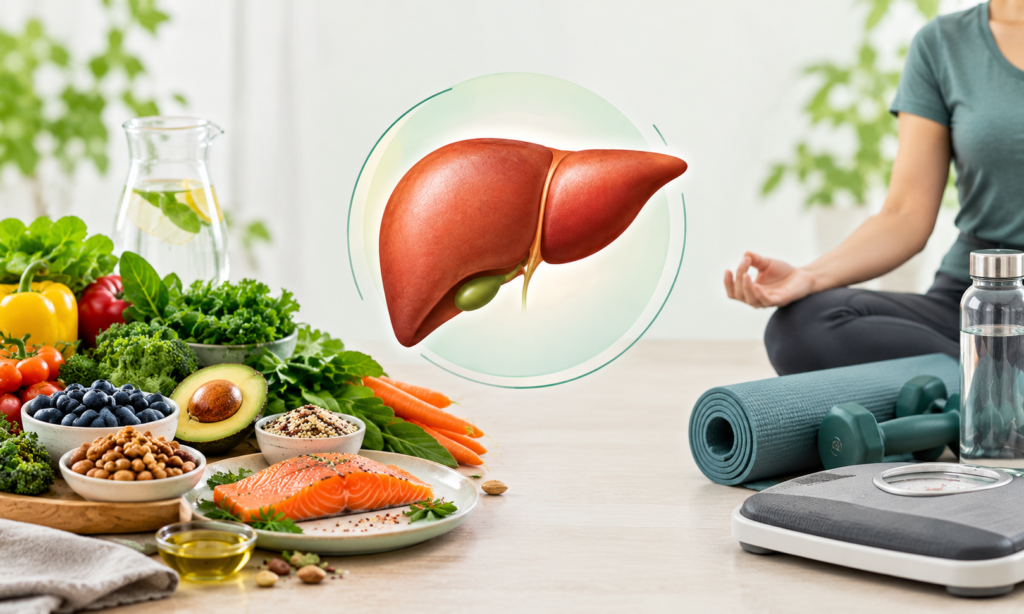
What Is Non-Alcoholic Fatty Liver Disease (NAFLD)?
NAFLD is a chronic liver disease affecting teetotalers or individuals who consume very little alcohol. It is caused by the build-up of excess fat in the liver cells.
What Are the Early Signs of NAFLD?
NAFLD is largely asymptomatic – you have it, but you may still not know. Many people live with it for years and yet could be unaware of it.
Nevertheless, the following early warning signs are indicators to watch out for:
Fatigue – A constant feeling of tiredness or low energy levels all the time.
Weight variations – Sudden, unexplained weight loss.
Upper-right abdominal pain – Mild upper right side stomach pain or a feeling of heaviness in the upper-right abdomen.
In its advanced stage, NAFLD manifests itself in the following ways:
- Jaundice
- Dark urine
- Itchy skin
- Abdominal swelling
- Memory or focus issues
What Causes Fat to Build Up in the Liver?
Every healthy, normal human being has a small amount of fat in their liver. However, if this value exceeds 5%–10% of the liver’s weight, then it is an indication of NAFLD.
In simple terms, NAFLD occurs because of excessive fat storage in the liver, as there is an imbalance between fat production and fat breakdown. This can happen due to many factors that include:
- Obesity
- Insulin resistance/diabetes (Type 2)
- High cholesterol levels
- Lack of physical activity/exercise
- Malnutrition
- Liver infections
- A family history of liver disease
How Is NAFLD Diagnosed?
Doctors resort to one or more of the following diagnostic processes to detect and confirm NAFLD:
- Blood tests specifically focusing on FIB-4 or APRI
- Imaging tests such as ultrasound, CT Scan, and MRI
- Liver biopsy
- Elastography
What Foods Should You Eat With NAFLD?
If you are diagnosed with NAFLD, you should be extra careful about your diet and eating habits. In fact, you should consume foods that will help reduce liver fat, control obesity, and improve insulin sensitivity.
Specifically, your food intake should mainly comprise:
Unsaturated Fats – Eat avocados, olives, and raw, unsalted nuts and seeds in generous amounts.
Whole Grains – Prefer whole-wheat or multigrain rotis.
Lentils – Consume a variety of dals (such as moong dal, masoor dal, and chana dal) as well as beans and chickpeas.
Vegetables & Fruits – Eat leafy green veggies such as palak and methi and fruits like apples and pears.
Garlic and Onions – Loaded with sulphur compounds, these facilitate natural detox.
Which Foods Should You Avoid With Fatty Liver Disease?
As an individual diagnosed with NAFLD, you should strictly avoid eating the following foodstuff:
- Sugary beverages, soft drinks like colas, cakes and pastries (sucrose-rich foods)
- French Fries, samosas, burgers (unhealthy saturated fats)
- Red meat (saturated fats)
- Salted pickles, canned soups, instant noodles (high sodium content)
- Also, you should avoid drinking alcohol in any form
How Can Weight Loss Help Reverse NAFLD?
Diet management forms an integral aspect of treating NAFLD, as it helps strike a blow at the root cause of obesity, insulin resistance, and systemic inflammation.
What Lifestyle Changes Can Improve Liver Health?
Eating nourishing food, exercising regularly, and giving up or limiting alcohol can help enhance liver health.
Can Exercise Help Reduce Liver Fat?
Yes – By improving insulin sensitivity and increasing fat oxidation.
How Long Does It Take to Reverse NAFLD?
Complete reversal and cure take anywhere between 1 and 3 years, though the recovery happens incrementally in stages.
When Should You See a Doctor for Fatty Liver?
Consult a gastroenterologist in Thane or a liver specialist if you notice or experience advanced warning signs, such as:
- Jaundice symptoms
- Quick abdominal swelling
- Vomiting blood
- Confusion, dreariness, or difficulty in walking
- Severe pain in the upper-right corner of the stomach, accompanied by fever
- Also, you should see a specialist when routine blood and imaging tests show abnormal results
What Complications Can Develop From NAFLD?
NAFLD can be dangerous and may lead to liver fibrosis, cirrhosis, and liver failure.
FAQs
Yes – if detected and treated in its early stages.
Yes; largely depending on its stage.
Yes, it is quite possible.
Yes, it can.
Yes, it is beneficial.
Yes, it can.
Yes, it does.
No – OTC medications and neutraceuticals can’t treat it.
Eat healthy, exercise regularly, and give up or limit alcohol consumption.