
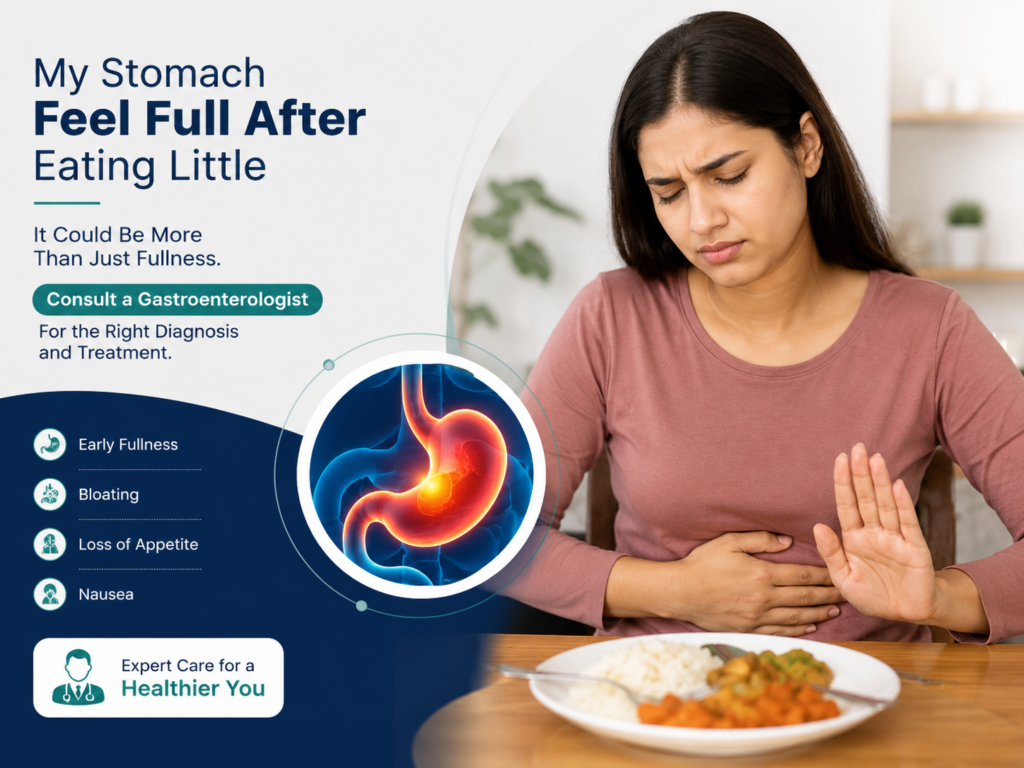
What Is Early Satiety?
Early satiety is the feeling of being uncomfortably full after consuming only a small amount of food. It goes beyond simply having a small appetite. People with this condition often cannot finish even a modest portion without feeling stuffed, bloated, or nauseous.
Over time, it can lead to unintentional weight loss and nutritional deficiencies, making it important to understand what is driving it.
Why Does My Stomach Feel Full After Eating Little?
There is rarely a single explanation. Several digestive conditions can trigger this sensation, and identifying the right one requires looking at the complete picture of your symptoms.
Indigestion (Dyspepsia)
Indigestion is one of the most common culprits. When the digestive process is sluggish or disrupted, food lingers in the stomach longer than it should, creating a persistent sense of fullness. Spicy foods, fatty meals, alcohol, and certain medications are frequent triggers.
Gastritis
Gastritis refers to inflammation of the stomach lining, often caused by a bacterial infection (specifically H. pylori), excessive use of painkillers, or chronic stress. The inflamed lining becomes hypersensitive, so even a small meal can feel overwhelming. Fullness after just a few bites are hallmark early satiety symptoms of gastritis.
Stomach Ulcers
Peptic ulcers are open sores that develop on the stomach lining or the upper part of the small intestine. They can make eating genuinely uncomfortable, leading people to eat less and feel full much faster than normal.
Acid Reflux (GERD)
Gastroesophageal reflux disease does not just cause heartburn. The backflow of stomach acid can irritate the esophagus and disrupt normal digestive rhythm, contributing to a sensation of fullness and pressure in the upper abdomen after meals.
Delayed Gastric Emptying (Gastroparesis)
In gastroparesis, the stomach muscles do not contract properly, so food moves through the digestive tract too slowly. This is one of the more serious causes of early satiety and is commonly seen in people with diabetes or those who have had stomach surgery. Feeling full after eating a small amount and feeling bloated are two of its most telling signs.
Functional Dyspepsia
This is a chronic digestive disorder with no identifiable structural cause, yet it produces very real symptoms including early fullness, bloating, and upper abdominal discomfort. It is more common than most people realise and is frequently linked to gut sensitivity and mobility issues.
Stress and Anxiety
The gut and brain are deeply connected through what is known as the gut-brain axis. High stress levels can slow digestion, increase stomach acid, and heighten sensitivity in the gut. All of these contribute to early satiety. If your symptoms tend to flare during anxious periods, stress may be playing a significant role.
What are the most common causes of early satiety?
While the conditions above can all contribute, some causes show up far more frequently than others in clinical practice. Understanding the most common triggers can help you have a more focused conversation with your doctor.
Helicobacter pylori infection
This bacterial infection is widespread and often goes undetected for years, quietly causing gastritis and ulcers that make eating uncomfortable. Many people in India carry the infection without realising it.
Eating disorders
Eating disorders can recalibrate how the stomach perceives fullness. When the stomach is repeatedly overstretched or underfed, its signalling to the brain becomes unreliable, sometimes triggering early fullness even during small meals.
Thyroid disorders
Thyroid disorders, particularly hypothyroidism, slow down metabolism and gut motility across the board. A sluggish thyroid means sluggish digestion, which is a setup for early satiety.
GERD
In this condition, the stomach acid backs up into your esophagus, causing heartburn, chest pain, and nausea. These symptoms can make it difficult to eat.
Peptic Ulcers
Peptic ulcers are sores in the lining of your stomach or the first part of your small intestine. Ulcers cause pain, nausea, and vomiting, making it difficult to keep food down.
Diabetes
This condition is strongly associated with gastroparesis, as high blood sugar over time damages the vagus nerve that controls stomach muscle contractions. This is one of the more overlooked early satiety causes in people managing long-term diabetes.
Certain medications
Certain medications, including opioid painkillers, anticholinergics, and some antidepressants can slow gastric emptying as a side effect, producing fullness that has nothing to do with how much you have eaten.
Hormonal changes
Hormonal changes during pregnancy or perimenopause can shift digestive patterns significantly, leading to earlier fullness, bloating, and food aversions that were not present before.
Early Satiety Symptoms
Early satiety doesn’t always come alone. It is often accompanied by other signs that can help pinpoint the cause. Common early satiety symptoms include:
Feeling full after just a few bites
Nausea during or after meals
Bloating and abdominal distension
Upper abdominal pain or discomfort
Unintentional weight loss
Loss of appetite
Why Do You Feel Bloated After Eating?
Bloating after meals is often tied to the same conditions that cause early satiety. When digestion slows down, gas builds up in the intestines and stomach, causing that uncomfortable, swollen feeling. Swallowing air while eating, food intolerances (such as lactose or gluten), and imbalances in gut bacteria can all make bloating worse. Carbonated drinks and high-fibre foods eaten in large quantities can also be contributing factors.
Feeling Full After Eating Small Amount and Bloated: What Does It Mean?
Symptom | Possible Cause |
Fullness after few bites | Gastritis |
Fullness + bloating | IBS |
Fullness + nausea | Gastropareisis |
Fullness + weight loss | Needs medical evaluation |
How do you cure early satiety?
A gastroenterologist will typically begin with a thorough medical history and physical examination. Depending on the suspected cause, they may recommend:
Endoscopy to inspect the stomach lining for ulcers or inflammation
H. pylori testing through breath, stool, or biopsy samples
Gastric emptying study to assess how quickly food leaves the stomach
Ultrasound or CT scan to rule out structural abnormalities
Blood tests to check for anaemia, thyroid issues, or other systemic conditions
How Is Early Satiety Diagnosed?
Treatment depends entirely on the underlying cause, but several approaches can help:
Eating smaller, more frequent meals instead of three large ones
Avoiding trigger foods such as greasy, spicy, or heavily processed items
Staying upright after meals to support digestion
Managing stress through mindfulness, exercise, or therapy
Medications such as proton pump inhibitors for acid reflux, antibiotics for H. pylori, or prokinetics for gastroparesis
Dietary adjustments guided by a nutritionist, especially for IBS or food intolerances
When Should You See a Gastroenterologist?
Occasional fullness after a large meal is normal. But if you find yourself regularly unable to finish small portions, or if early satiety is accompanied by unexplained weight loss, persistent nausea, vomiting, or blood in your stool, do not delay seeking medical attention. These could be signs of a condition that needs prompt investigation.
A gastroenterologist in Thane can conduct the necessary evaluations and create a treatment plan tailored to your specific condition, rather than a one-size-fits-all approach.
Conclusion
Understanding why your stomach feels full after eating little is the first step toward feeling better. Early satiety is not something you have to simply live with. Whether the cause is gastritis, gastroparesis, functional dyspepsia, or chronic stress, effective treatment options are available. Pay attention to your symptoms, track when they occur, and consult a specialist if they persist. Your digestive health has a significant impact on your overall wellbeing, and it deserves the right care.
FAQs
What does it mean when you feel full after eating very little?
Feeling full after eating very little is called early satiety. It can result from conditions such as gastritis, gastroparesis, or functional dyspepsia, all of which affect how the stomach processes food. If it persists, consult a gastroenterologist for a proper diagnosis.
Why do I feel full when I haven’t eaten anything all day?
Even without eating, conditions like gastroparesis or functional dyspepsia can cause a lingering sensation of fullness. Delayed gastric emptying means the stomach retains food or fluid longer, making it feel full even on an empty stomach.
Is early satiety a serious condition?
Early satiety itself is a symptom, not a disease. However, it can become serious if it leads to significant weight loss or malnutrition. The seriousness depends on the underlying cause, which is why a medical evaluation is important when symptoms persist.
Can gastritis cause early satiety?
Yes, gastritis is one of the most common causes of early satiety. Inflammation of the stomach lining reduces its capacity and sensitivity, making even small meals feel like too much. Treating the underlying gastritis usually helps relieve this symptom.
Why do I feel bloated after eating small amounts?
Bloating after small meals often points to slow gastric emptying, irritable bowel syndrome, or food intolerances. Gas trapped in the digestive tract causes the abdomen to feel distended and uncomfortable even when very little food has been consumed.
Can stress cause early satiety?
Absolutely. Stress activates the gut-brain axis, altering digestion, increasing stomach acid, and heightening gut sensitivity. Chronic anxiety can slow gastric emptying and reduce appetite, both of which contribute to early satiety symptoms in otherwise healthy individuals.
When should I consult a gastroenterologist for early satiety?
You should consult a gastroenterologist if early satiety lasts more than a few weeks, is accompanied by weight loss, nausea, or pain, or significantly affects your ability to eat. Early evaluation helps identify treatable conditions before they progress further.