
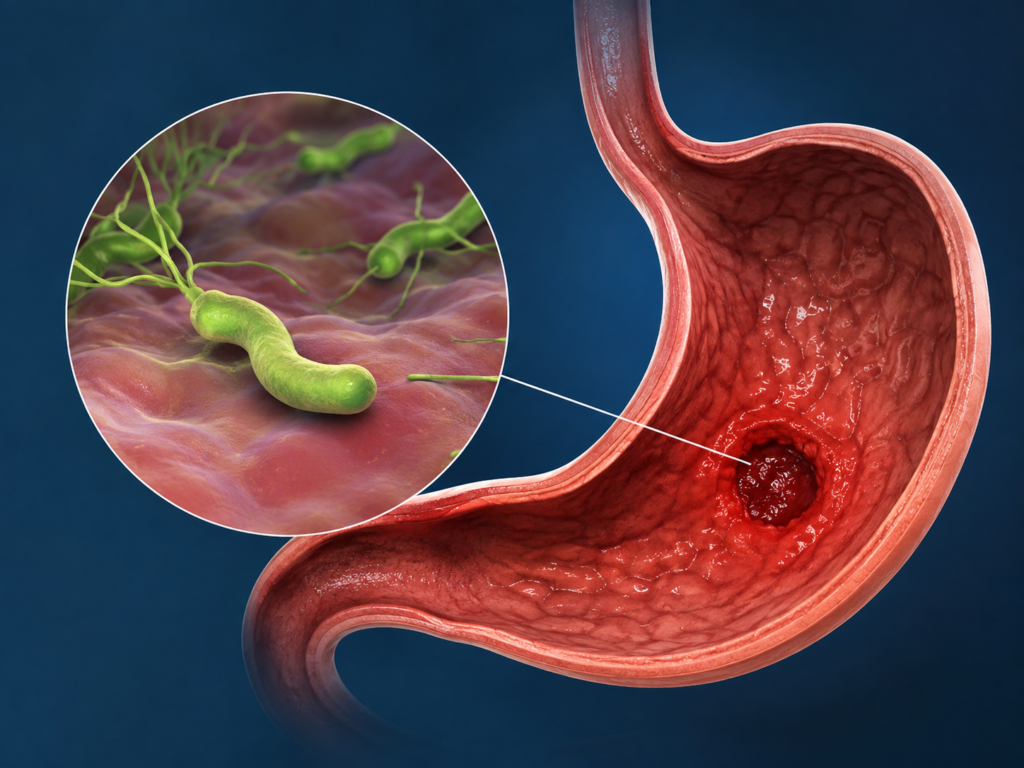
Peptic ulcers are open sores which occur in the stomach or the upper end of a small intestine. Among the prominent reasons is an infection of Helicobacter pylori, also referred to as H. pylori. The information concerning the correlation of the h pylori in peptic ulcer can help doctors make a quick diagnosis and choice of treatment.
What Is H. pylori?
Understanding the H. pylori Bacteria
- pylori is a spiral bacterium that could be an inhabitant of the stomach wall. It is able to endure stomach acid and induce chronic inflammation. Some people who are infected do not have any signs. Indigestion, stomach aches or ulcers may be experienced by other people.
How It Spreads
Close contact, contaminated food or contaminated water are some of the ways through which H. pylori can be transferred. The risk of being infected is without hygiene. Infection is a disease, which usually starts in childhood and can last several years. The possession of good hand hygiene and safe food practices can reduce transmission.
What Is the H. pylori Role in Peptic Ulcers?
pylori may compromise the protective lining of the stomach leading to inflammation and allowing stomach acid to destroy it. Eventually, such damage may result in an open sore.
One of the significant causes of peptic ulcers is H. pylori infection. The bacterium is capable of making the inflammation worse and reducing a natural stomach lining. This explains the role of h pylori in peptic ulcer formation. Removing infection can make the ulcers heal and decrease the chances of recurrence. If you are experiencing symptoms, consulting a gastroenterologist in Thane can help with proper evaluation and treatment.
Causes and Risk Factors of H. pylori Infection
Common Causes
There is the possibility of getting infected in case of contact with infected body fluids, food, and water. Hygiene and condition of living may be a determinant of infection.
Who Is at Higher Risk?
Individuals in high population families or where there is low clean water availability are at risk. Risk can be increased by a family history.
Symptoms of H. pylori-Related Peptic Ulcers
The most prevalent ones include pain in the upper abdomen, bloating, nausea, frequent belching and early fullness. Many individuals might not get any symptoms.
Fecal is black, bloody diarrhea and vomiting, severe abdominal pain, dizziness / fainting needs emergent medical help. All these might be the symptoms of bleeding or some other severe complication.
Diagnosis and Treatment
How H. pylori Is Diagnosed
A breath test, a stool test or a blood test can help detect H. pylori, as indicated by doctors and they treat it through endoscopy.
Treatment Options
The antibiotics are normally used together with acid reducing medicine. The full treatment that is prescribed needs to be taken since no form of incomplete treatment will enable infection to further.
Lifestyle Tips to Support Recovery
Take medicine and never smoke. No special ulcer diet is required and it may be a good idea to omit foods which cause the discomfort of your symptoms.
Is Prevention of H. pylori and Peptic Ulcers possible?
Care and Food Safety
Wash hands and take safe drinking water. Avoid using or sharing food or utensils when infected or suspected.
Good Gut Health
Use painkillers such as NSAIDs moderately and not excessively. No smoking, and be concerned with a doctor regarding chronic stomach issues.
Conclusion
H. pylori is a common cause of peptic ulcers and possible cause of the weakening of the stomach lining over time. Early testing and treatment can help to avoid other issues. Any individual who has recurring or chronic signs of ulcers must pay a visit to the doctor. A gastroenterologist in Thane will help to identify the problem, give the right medication, and monitor your progress.
FAQs
· What is H. pylori and why does it cause peptic ulcers?
H. pylori stomach bacteria can cause damage to the protective lining. This enables the stomach acid to play its part in the formation of the ulcers.
· What are the common reasons for an H. pylori infection?
The symptoms may include abdominal pain, full belly, nausea, belching, and fullness.
· Is it possible to cure H. pylori?
Yes, H. pylori is likely to be removed through the use of applying a special antibiotic regimen and acid-preventive medication. Follow-up testing can be used to form a successful treatment.
· What is the diagnosis of H. pylori?
A breath or stool test is usually conducted by doctors to determine an infection.
· Which foods should I avoid in case I have a peptic ulcer?
Avoid food or beverages which clearly exacerbate your condition.
· When, as regards ulcer, ought I consult a gastroenterologist?
Seek the doctor in case of persistent, recurrent or progressive symptoms. Get urgently attended to emergencies of hemorrhagic or acute pains, light-mindedness or black bowels.