
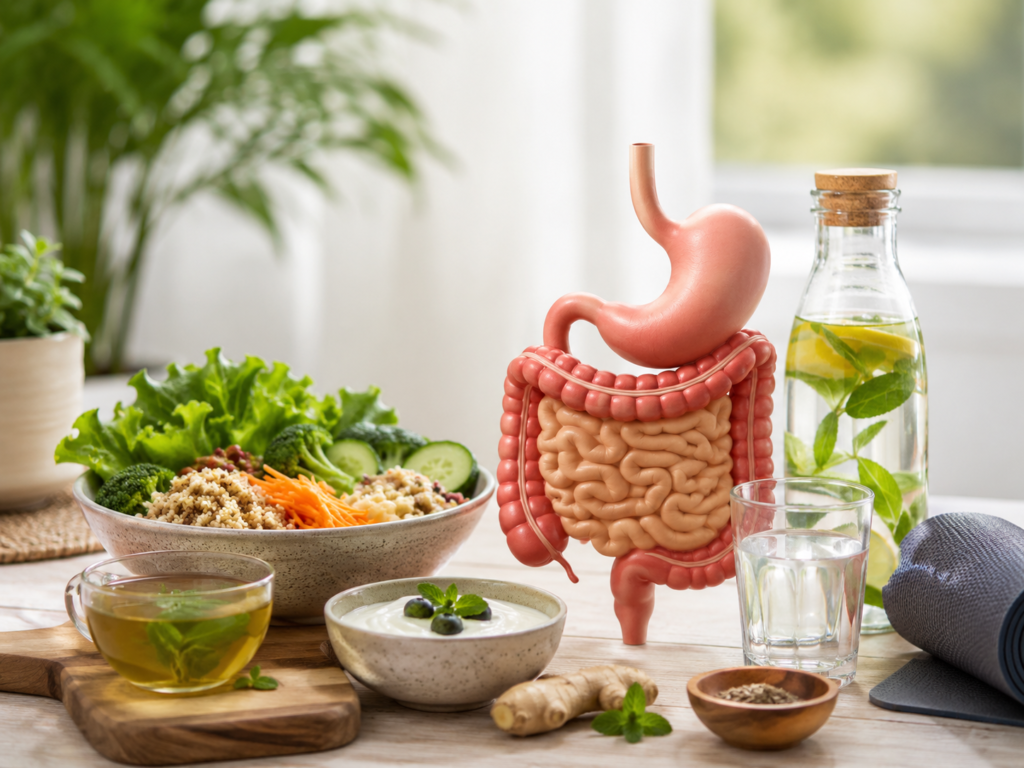
To help the body to break down the food, absorb nutrients and eliminating waste, digestion is needed. Simple habits such as mindful eating, hydration, increased low-carbs fiber intake, exercise, and stress will help to support digestive health.
Why Healthy Digestion Matters
The digestive system involves stomach, intestines, liver, pancreas and other parts of the digestive system, which is a process known as digestion. The food can be absorbed and the waste can pass through the digestive tract with a healthy digestive system. A gastroenterologist in Thane can provide guidance for maintaining digestive health.
How to Improve Digestion Naturally at Home
Minor changes to routine are possible to aid in more relaxed digestion and normalization of bowel movements. If you are wondering how to digest food faster, healthy eating habits, regular physical activity, and proper hydration may support your digestive process.
Know how to Improve Digestion Naturally at Home:
· Eat Slowly and Chew Properly
Consuming food too quickly may not leave one full as quickly as it may and may make food consumption unpleasant. Learn the routine of proper digestion of food and do not hurry with meals.
· Stay Hydrated
Normal digestion is supported by water which in cases with sufficient fiber within the diet may aid in softening of the stool. Drinking water with or after meals does not affect the food you eat.
· Increase Fiber Gradually
Fruits, vegetables, whole grains, beans, lentils and nuts are sources of dietary fiber. The amount of fiber that adults should take is estimated to be 22 – 34grams per day though it varies with an individual. Fiber should be gradually increased and sufficient fluid consumption should be observed in order to avoid discomfort.
· Stay Physically Active
Exercise can also aid bowel movements and can be helpful in relieving constipation. Having additional movement in your everyday routine can be beneficial as well.
· Manage Stress
The effect of stress on the digestive system varies as per the individual. It can help to bloat, cause abdominal pain, constipation, diarrhoea or exert negative effects on the symptoms of the underlying digestive disorders.
Foods That Support Better Digestion
Foods which you regularly eat can contribute a large role in maintaining your digestive system healthy. Alternating between one kind of food or drink, one can have a balanced diet consisting of an adequate volume of fiber, fluids and nutrients.
Fiber-rich options include:
- Oats and other whole grains
- Fruits such as apples, pears, and berries
- Vegetables
- Beans and lentils
- Nuts and seeds
Symptoms can also be aggravated in some high-fiber or other foods, particularly in case you have a digestive disease, such as IBS. When persistent, the changes in diet should be made individualized.
When to See a Gastroenterologist in Thane
Symptoms of digestion that keep coming back or are not diminished by the basic changes in lifestyle can be addressed by a doctor.
An experienced gastroenterologist in Thane can test the ongoing symptoms and assist in the diagnosis of whether the problem is brought about by a problem in the digestive system or maybe another underlying problem.
It is advisable to consult with a medical professional in case of the unremitting abdominal pain, persistent constipation, frequent indigestion, bowel alterations, the impossibility of swallowing, or blood in the stool.
Conclusion
Instead of fast solutions to improve digestion, the key is to develop habits that are beneficial at home. Proper intake of water through slow eating, plenty of water, gradual intake of fiber, physical activity and control of stress can help maintain healthy digestion.
There is no such thing as a stomach cleanse, as an alternative to normal digestion or health care. When the life symptoms are persistent, severe or day-to-day, it may be beneficial to seek the advice of a qualified gastroenterologist to assist in the understanding of the underlying cause.
FAQs
1. How can I improve my digestion naturally at home?
Reduce the rate of nutrient intake, chew food, maintain ample water intake, eat the essential foods but in large amounts of fiber, be physically active and minimize the impact of stress.
2. Which foods help improve digestion quickly?
No one particular food can enhance instant digestion. Foods that contain fiber like fruits, vegetables, whole grains, beans, and lentils can keep the bowel frequency normal as long as they are eaten in good amounts.
3. Can drinking more water improve digestion?
Plenty of water helps digestion, and may soften stool. This is particularly noteworthy with the initiation of additional dietary fiber.
4. When should I see a gastroenterologist for digestive problems?
Consider medical consultation where the signs of problematic digestive symptoms are chronic, recurrent, and severe or have warning signs such as blood in the stool or prolonged pain in the abdomen of a person.
5. Is walking after meals good for digestion?
The overall digestive system and normal bowel movements can also be aided with moderate exercise. Regular activity is also helpful particularly for people with constipation.
6. Can stress affect digestion?
Yes. Stress could also influence digestion, and even cause such symptoms as bloating, stomachache, constipation, and diarrhea.